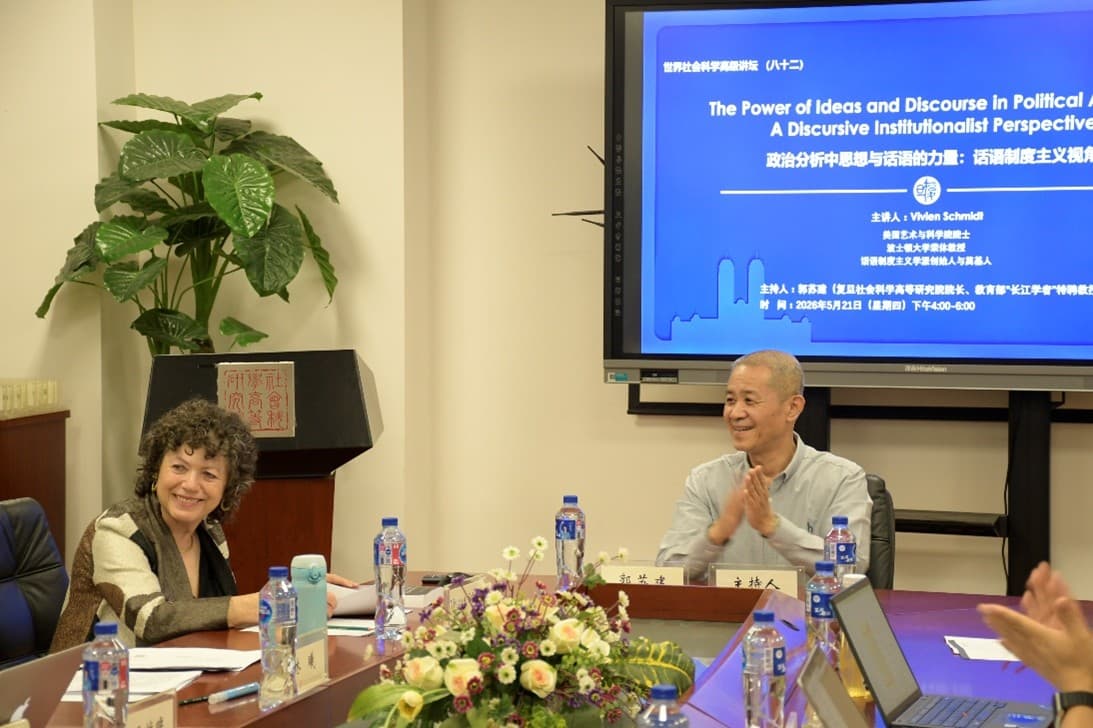
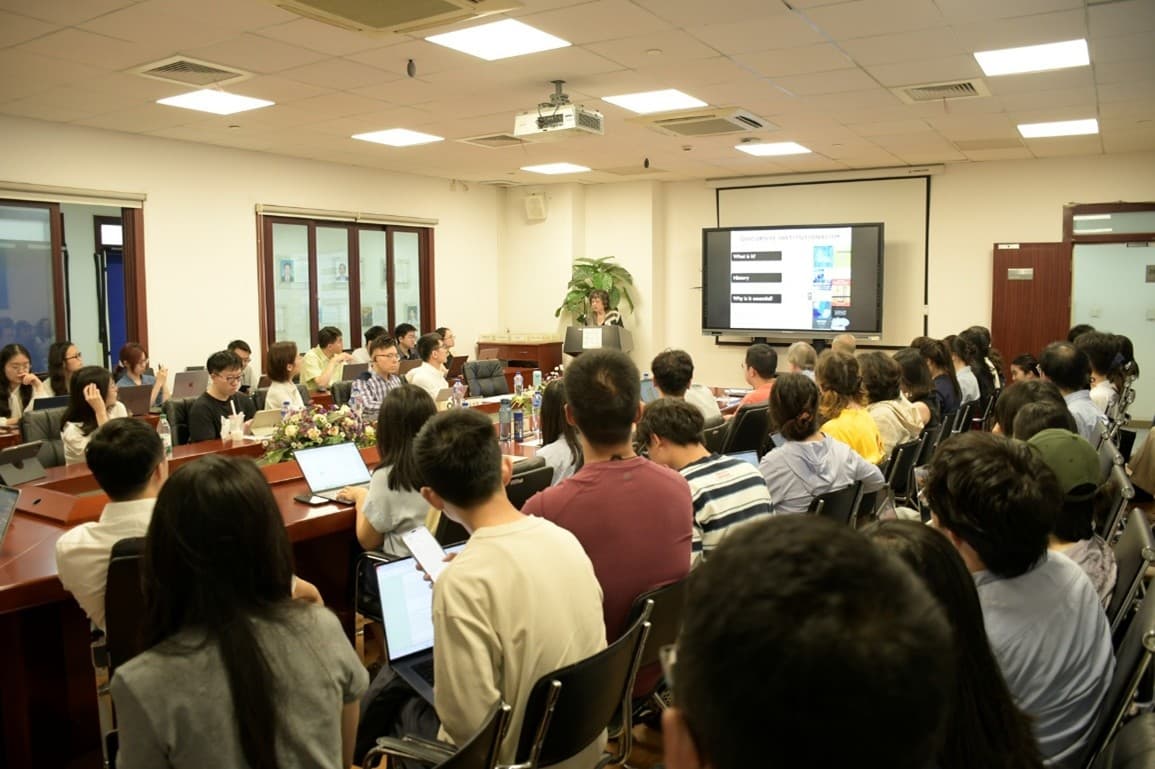
The "World Social Science Advanced Lecture" (No. 82), organized by the Fudan Institute for Advanced Study in Social Sciences (Fudan IAS), was held on May 21, 2026, at Fudan University. Vivien A. Schmidt, Jean Monnet Professor of European Integration, Professor Emerita at Boston University and Fellow of the American Academy of Arts and Sciences, gave a lecture entitled The Power of Ideas and Discourse in Political Analysis: A Discursive Institutionalist Perspective. The lecture room was packed to capacity, with enthusiastic listeners also gathered in the hallways.
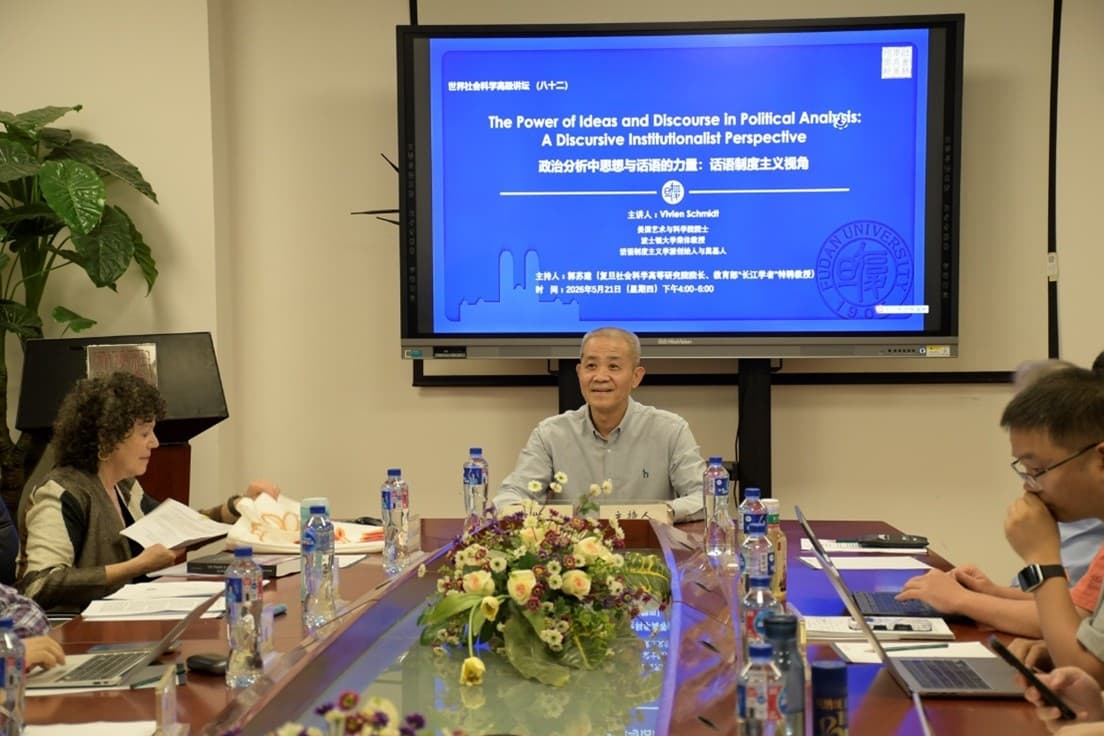
Professor Sujian Guo, Dean and Distinguished Professor of Fudan IAS, chaired the event. In his opening remarks, Professor Guo extended a warm welcome to Professor Vivien A. Schmidt and introduced her distinguished academic achievements. Professor Schmidt is a Fellow of the American Academy of Arts and Sciences and Professor Emerita at Boston University. Her research focuses on political theory, comparative politics, international relations, etc., with a particular emphasis on the importance of ideas and discourse in political analysis. She was the first to systematically establish “Discursive Institutionalism” as the fourth new institutionalism. Professor Schmidt has published 14 books and over 300 journal articles. Her book, Europe’s Crisis of Legitimacy: Governing by Rules and Ruling by Numbers in the Eurozone, received the Best Book Award of the American Political Science Association’s Ideas, Knowledge and Politics section. Professor Schmidt expressed her gratitude for the invitation from Professor Sujian Guo, noting in particular that her latest book The Power of Ideas and Discourse in Political Analysis: A Discursive Institutionalist Perspective had just been published and that this lecture would be based on it.
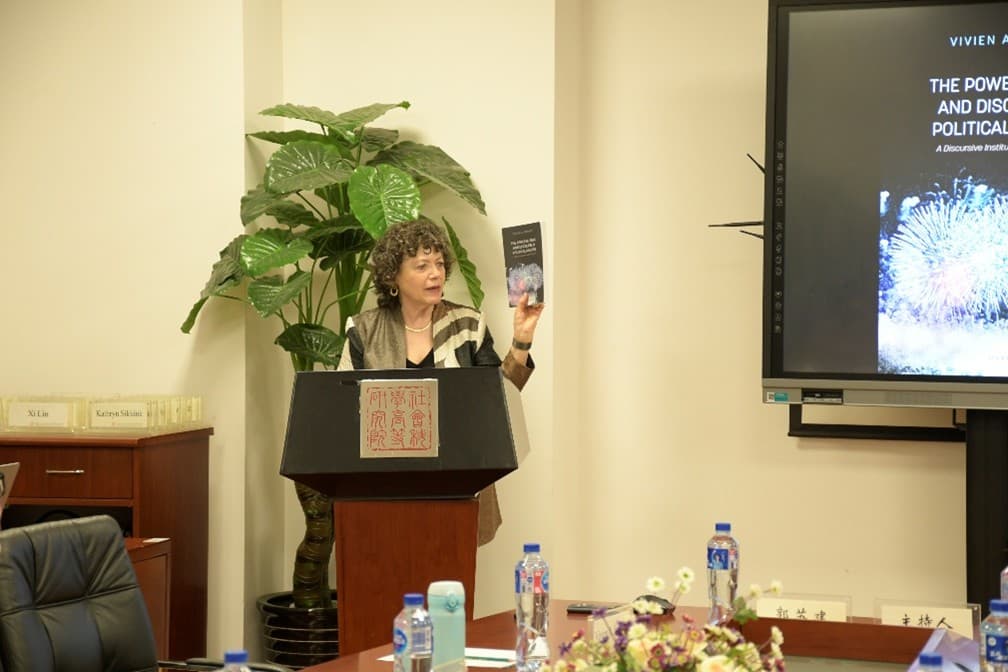
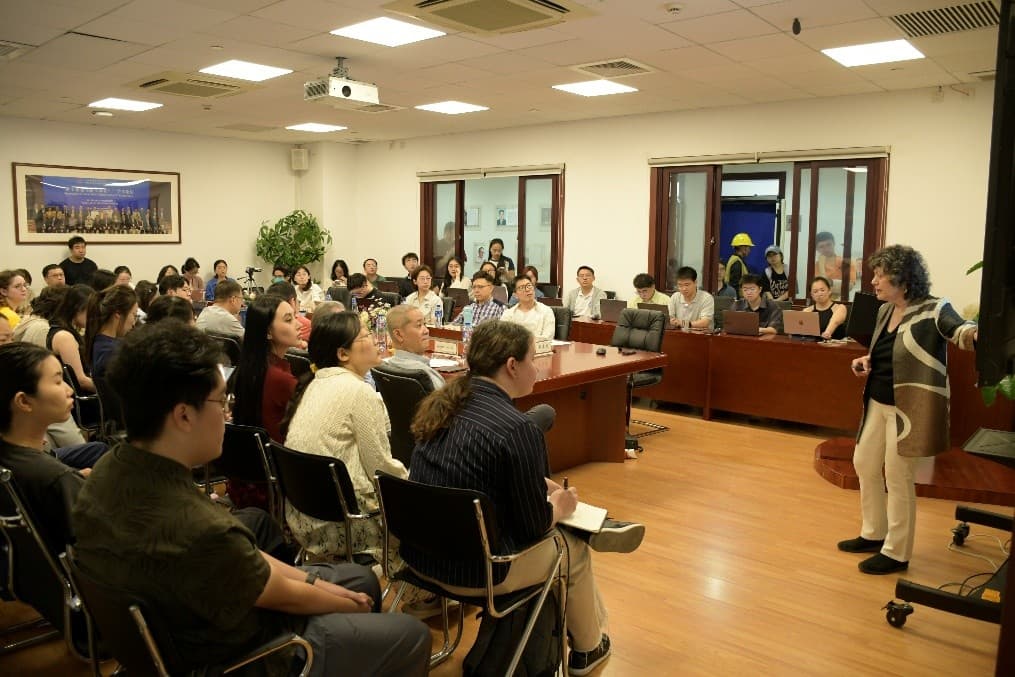
Professor Schmidt introduced first the concept, history and necessity of Discursive Institutionalism. Then she systematically outlined three forms of thought and discourse: evocative forms, integrative forms and overarching forms. Next, Professor Schmidt discussed the analysis of discursive interaction processes. She distinguished three types of discursive processes: exchange, persuasion and domination, and focused on two types of arguments: the coordinative arguments and the normative arguments. After that, Professor Schmidt explored a three-part analytical framework for ideational and discursive power: persuasive power through ideas via discourse, coercive power over ideas in discourse and structural/institutional power within ideas in discourse. On the issue of legitimacy, she proposed a three-dimensional analytical framework of “input—throughput—output” and used the eurozone crisis as an example to illustrate that EU officials’ overreliance on the throughput and output legitimacy of “rule by rules” and “rule by numbers”—while neglecting input legitimacy—ultimately led to the rise of populism. Following this, Professor Schmidt introduced her “Four M’s” analytical framework for populism: Message, Messenger, Medium and Milieu. In the last part, Professor Schmidt emphasized that the core of discursive institutionalism is methodological pluralism. It does not intend to replace the other forms of institutionalism but rather offers an analytical framework which allows researchers to flexibly select the most appropriate analytical tools based on their research subjects.
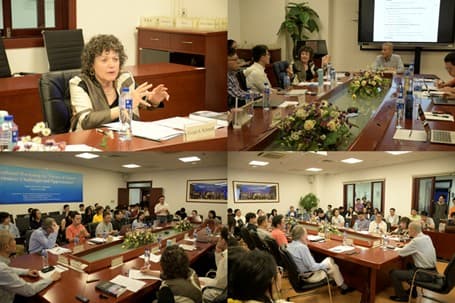
Professor Sujian Guo chaired the Q&A session. Attendees actively posed questions, covering topics such as the coercive power of the state in shaping discourse in the age of AI, how discursive institutionalism contributes to research on Rational Choice Institutionalism and Game Theory, the evolution of the EU’s normative power and a comparison with China’s discursive power. Professor Schmidt provided insightful responses to each question. Finally, Professor Guo expressed his gratitude to Professor Schmidt for her rich and engaging lecture. The lecture concluded successfully amid enthusiastic applause from all the attendees.